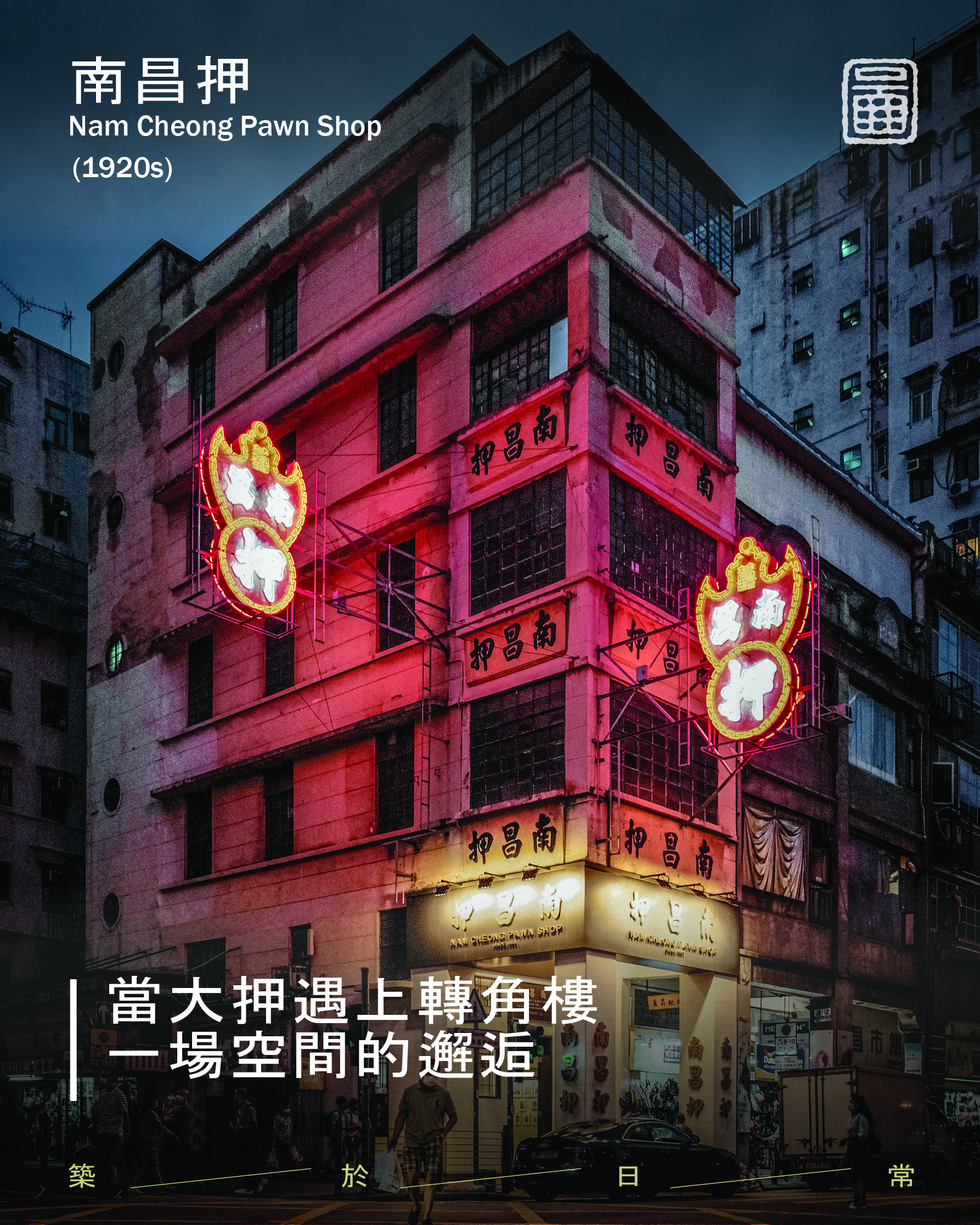



When the Pawn Meets the Corner House: A Spatial Encounter
Date: 25 February 2026
Despite the changing times, Hong Kong retains over a hundred pawn shops that are located in stand-alone building. A prime example is Nam Cheong Pawn Shop in Sham Shui Po. Built in the 1920s, this Grade 3 historic building features distinct Art Deco elements. Its layout follows the concepts of "shop at front, warehouse at back" and "living above, business below." While the ground floor serves as the transaction core, the upper floors house the counting room and quarters. At the highest point lies the "Seng Lau" (God's Tower)—a highly private, secure vault for valuables like jewelry and gold.
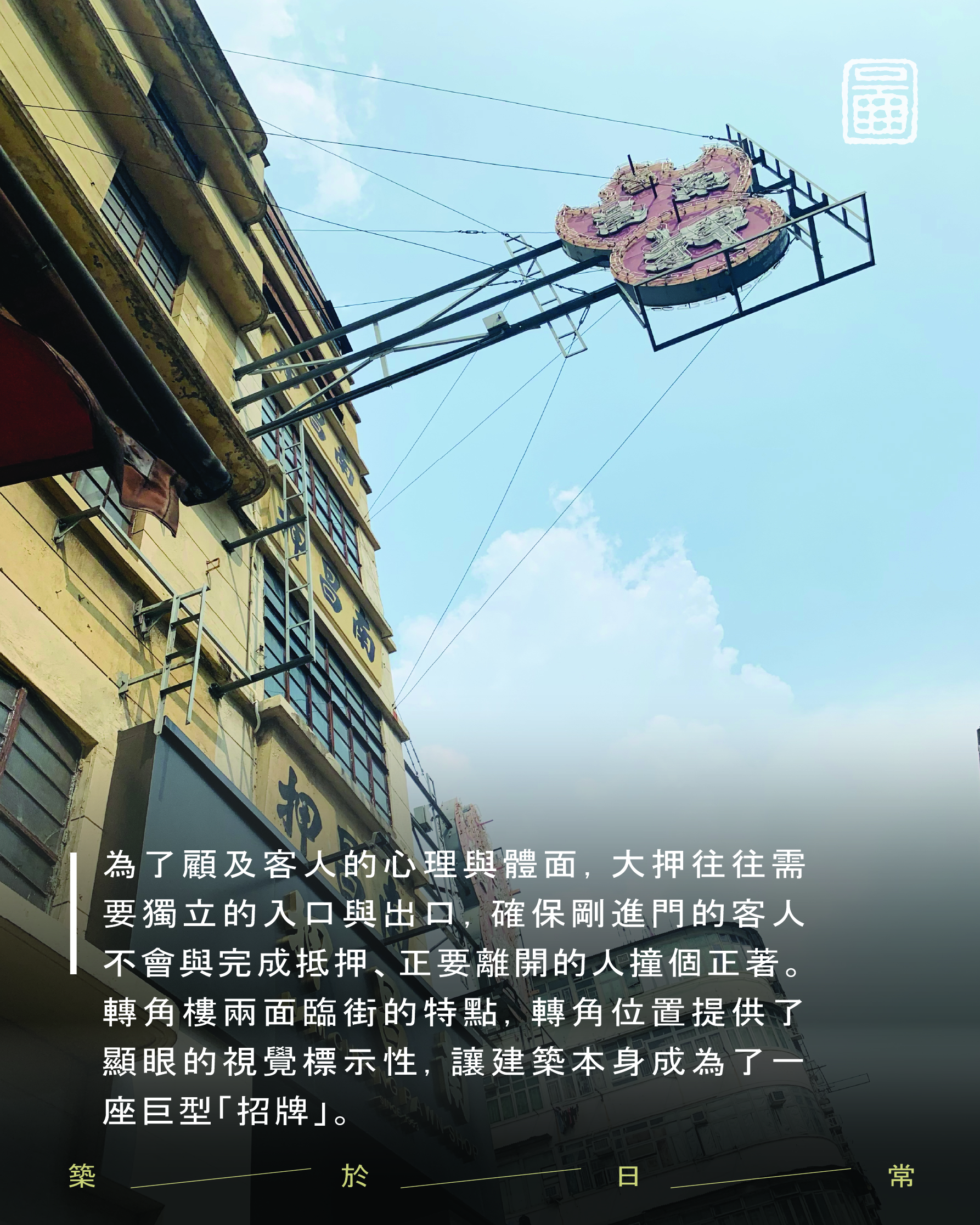
The interior layout meticulously considers privacy. To preserve the dignity of clients, pawn shops often require separate entrances and exits so that arriving customers do not encounter those leaving. The Corner House morphology perfectly accommodates this "dual-door" concept. By utilizing the two street-facing facades, architects provided a vital psychological buffer through clever arrangement. Furthermore, the prominent corner position grants high visibility, turning the architecture itself into a giant "signboard."
In a city driven by economic efficiency, it is rare for a single traditional trade to occupy an entire building. Nam Cheong Pawn survives not only through its unique structure but also due to its ownership by a family conglomerate, allowing this century-old landmark to preserve its original function and spatial integrity.
Text and Photography: @kongcept852 (Commissioned by HKIA)