


Hong Kong Architecture Student Shines at ARCASIA Thesis of the Year 2026
Date: 18 September 2026
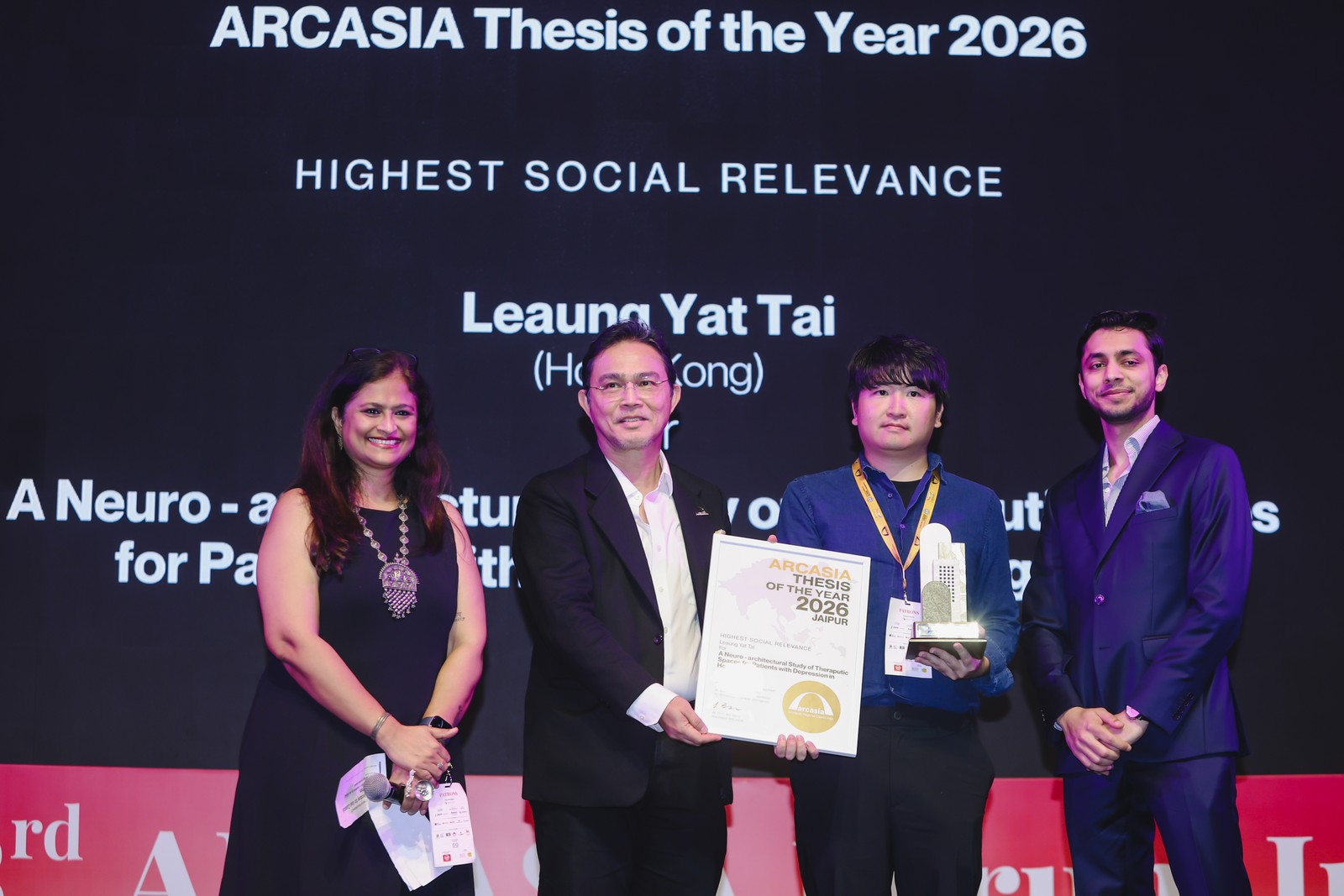
The Hong Kong Institute of Architects (HKIA) is incredibly proud to congratulate Leung Yat Tai, an architecture student from Hong Kong Chu Hai College, on winning the "Highest Social Relevance" award at the ARCASIA Thesis of the Year (TOY) 2026.
His award-winning thesis, “A Neuro-architectural Study of Therapeutic Spaces for Patients with Depression in Hong Kong”, captivated the jury with its thoughtful approach to mental health and spatial design. This major recognition highlights the exceptional calibre, human-centric vision, and international competitiveness of Hong Kong’s emerging architectural talent.
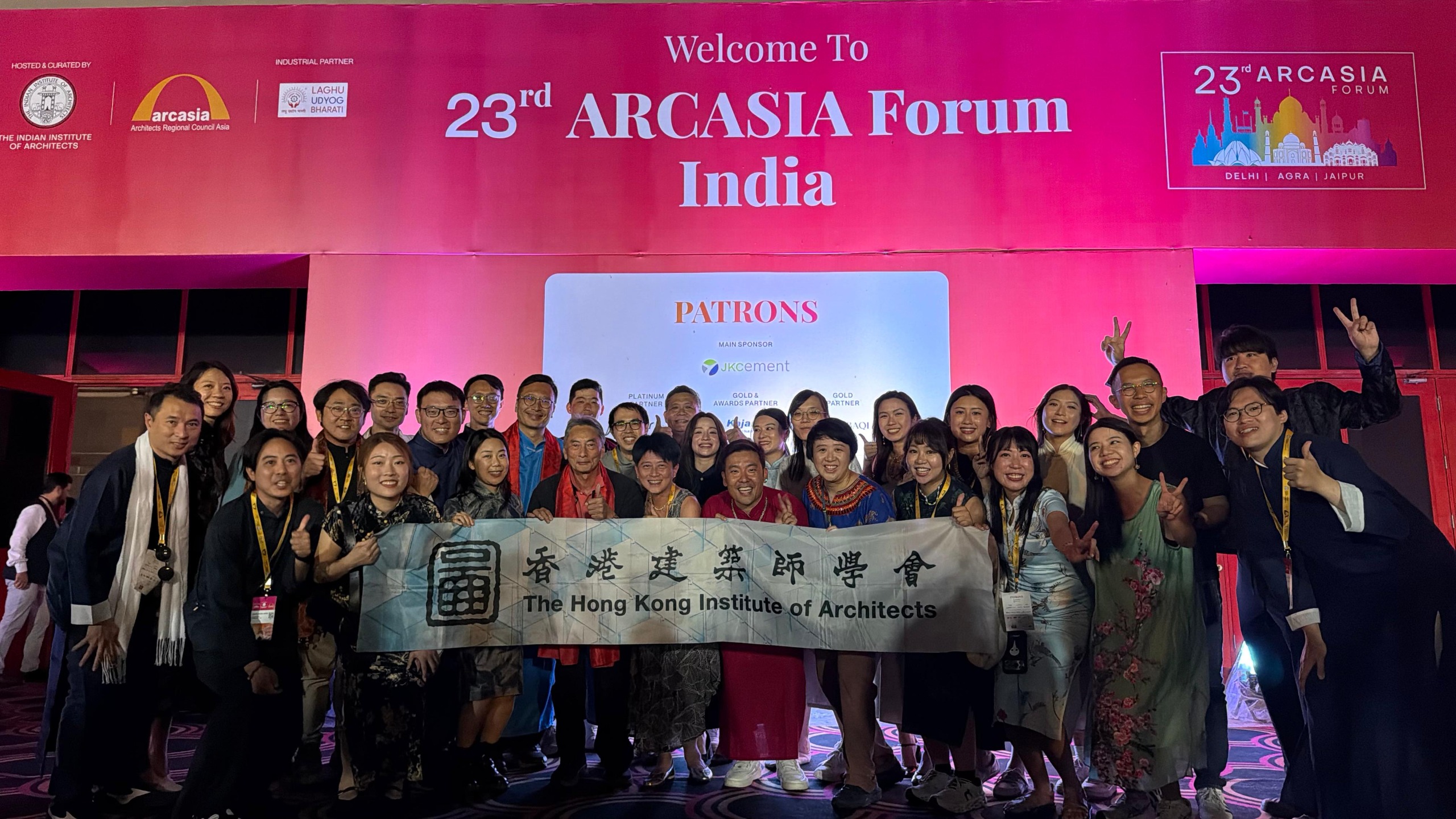
Following his journey to India to attend the 23rd ARCASIA Forum and connect with regional peers, Yat Tai shared his thoughts on the experience and what this milestone means to him:
Reflection on the 23rd ARCASIA Forum Trip - Leung Yat Tai
"It was a great honor to represent Hong Kong alongside HKIA members at the 23rd ARCASIA Forum in India. This trip stands out as one of the most meaningful experiences of my life, allowing me to connect with representatives from ARCASIA’s 22 member organizations and creating many unforgettable memories as I explore the world.
As an architecture student, this was not only my first time traveling with HKIA members, but also a fantastic opportunity to learn from professionals across different fields. They generously shared their knowledge and experiences, which greatly inspired my future career path—from the future of AI technology in architecture, to landscape architects' perspectives on India’s urban planning and wildlife boundaries, as well as adaptive reuse in India’s tourism sector.
Through the Forum and exhibitions, I observed the unique technical strengths of different countries and how they respond to their specific social and geographical challenges. Witnessing how Thailand’s Waterfront Architecture responds to coastal erosion and how Singapore’s Biophilic Design adapts to the equatorial climate shifted my mindset. I realized that the topics we study in lectures are real and urgent challenges for these nations, not just building styles or theories in a textbook.
I would also like to express my heartfelt gratitude to Prof. CHU, Hoi Shan Paul (Dean, Faculty of Science and Engineering, Hong Kong Chu Hai College) for nominating my thesis to ARCASIA, and to my tutor, Mr. KWAN, Charles, for his invaluable guidance on my thesis.
Finally, I want to thank all the HKIA delegation members for their care and guidance throughout this trip. What I gained from you all goes far beyond textbook knowledge!"